npm vs Yarn vs pnpm: Package Manager Comparison
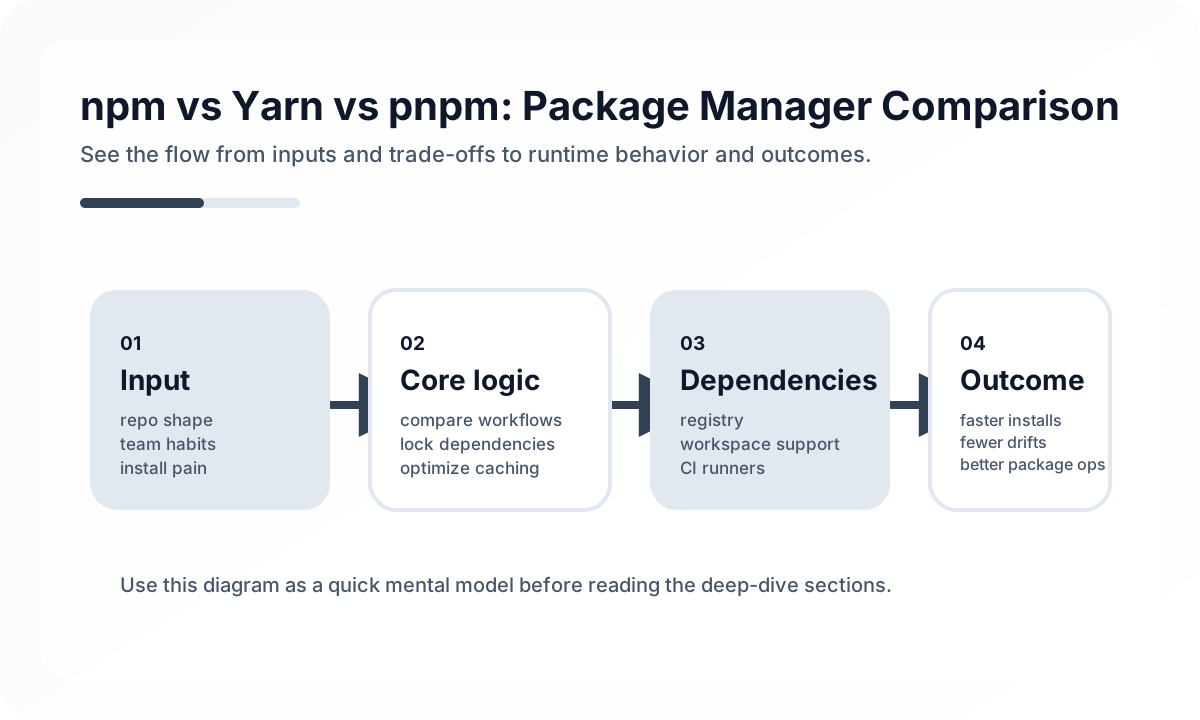
That is why choosing between npm, Yarn, and pnpm should begin with repository shape and operating discipline rather than benchmark screenshots.
What Actually Matters
The practical differences are usually these:
- lockfile stability
- workspace support
- dependency resolution strictness
- disk efficiency
- cache behavior in CI
- how much accidental dependency leakage is tolerated
Those concerns affect monorepos, onboarding, and production incidents more than command syntax ever will.
npm Is the Compatibility Default
npm is the safest default when a team wants the broadest ecosystem compatibility and the lowest onboarding surprise.
It works especially well when:
- the repository is small to medium
- workspace needs are basic
- the team values familiarity over strictness
- external contributors are common
The downside is that npm does not push teams as aggressively toward dependency hygiene as pnpm does. In larger repositories, that can delay the discovery of structural problems.
Yarn Still Matters, but Context Matters More
Yarn has a long history in workspace-heavy JavaScript teams. Depending on the generation in use, teams may care about:
- established workspace conventions
- zero-install or cache-oriented workflows
- existing ecosystem integration
- migration cost from older repositories
The practical warning is that “Yarn” is not one uniform experience. Teams should be explicit about which generation and features they are standardizing on. A repository with mixed Yarn assumptions becomes harder to reason about than one with a clearly chosen simpler tool.
pnpm Is Strong When Repository Scale and Discipline Matter
pnpm becomes compelling when:
- the repository is a monorepo
- many packages share dependencies
- install size and disk duplication matter
- the team wants stricter dependency boundaries
Its biggest practical benefit is not only speed or disk savings. It exposes dependency mistakes earlier by being less forgiving about undeclared transitive access. That stricter behavior can feel painful at first, but it often reveals real structural debt.
Monorepos Change the Decision
For a monorepo, the question becomes less “which CLI feels nicer?” and more:
- how fast can affected packages install in CI
- how clearly are workspace boundaries enforced
- how predictable is caching
- how expensive is lockfile churn
In many monorepo teams, pnpm or a carefully standardized Yarn setup wins because the repository itself becomes the dominant constraint.
Lockfile Discipline Is More Important Than Marginal Features
Once a team chooses a package manager, the hardest problems usually come from inconsistent operation, not missing features.
Common failures:
- developers regenerating lockfiles with different tools
- CI using a different package-manager version than local machines
- mixed local caches creating confusing install outcomes
- switching managers without a migration plan
A mediocre tool operated consistently is usually healthier than a stronger tool used inconsistently.
CI and Cache Strategy Matter More Than Local Benchmarks
Teams often compare local clean installs while ignoring the real cost center: CI.
The better questions are:
- are install results reproducible in CI
- is dependency cache reuse effective
- does the tool make changed-based pipelines cheaper
- can cache misses be understood easily
If the CI path is weak, package-manager choice alone will not save delivery speed.
A Practical Recommendation
- Choose npm when simplicity, compatibility, and low surprise matter most.
- Choose pnpm when monorepo scale, strictness, and disk efficiency matter.
- Choose Yarn when the team already has a strong Yarn-based operating model and a clear reason to keep it.
The key is not choosing the most fashionable option. It is choosing one tool and building repository discipline around it.
Team Checklist
- Does the chosen tool match repository scale and workspace complexity?
- Is the package-manager version pinned in CI and local setup?
- Is lockfile discipline enforced consistently?
- Are accidental transitive dependencies being caught early enough?
- Does the tool reduce CI cost instead of only improving local perception?
Closing Judgment
There is no universal winner among npm, Yarn, and pnpm. The best package manager is the one that fits repository scale, dependency discipline, and CI reality, then stays standardized across the team. Most long-term pain comes not from the wrong tool, but from half-committed operation.
Continue Reading
Related posts
Designing Search Architecture for Engineering Docs
As documentation grows, the problem shifts from writing to finding. This guide explains how to design search-friendly engineering documentation.
🔧 ToolsRunning an Engineering Handbook as Code
Team rules decay quickly when they live only in a wiki. A useful handbook should evolve alongside development work.
📚 IT StoriesWhy Developers Fell in Love with the CLI
Even in an age of polished GUIs, developers keep returning to the terminal. This story explains why the CLI became a cultural center of engineering.
⚙️ BackendDesigning and Implementing a GraphQL API: How Is It Different from REST?
This guide covers schema design, resolver responsibility, N+1, mutation design, authorization, and operational tradeoffs when treating GraphQL as a contract model rather than just selective field fetching.
Next Path