Practical React Testing Library Design Guide
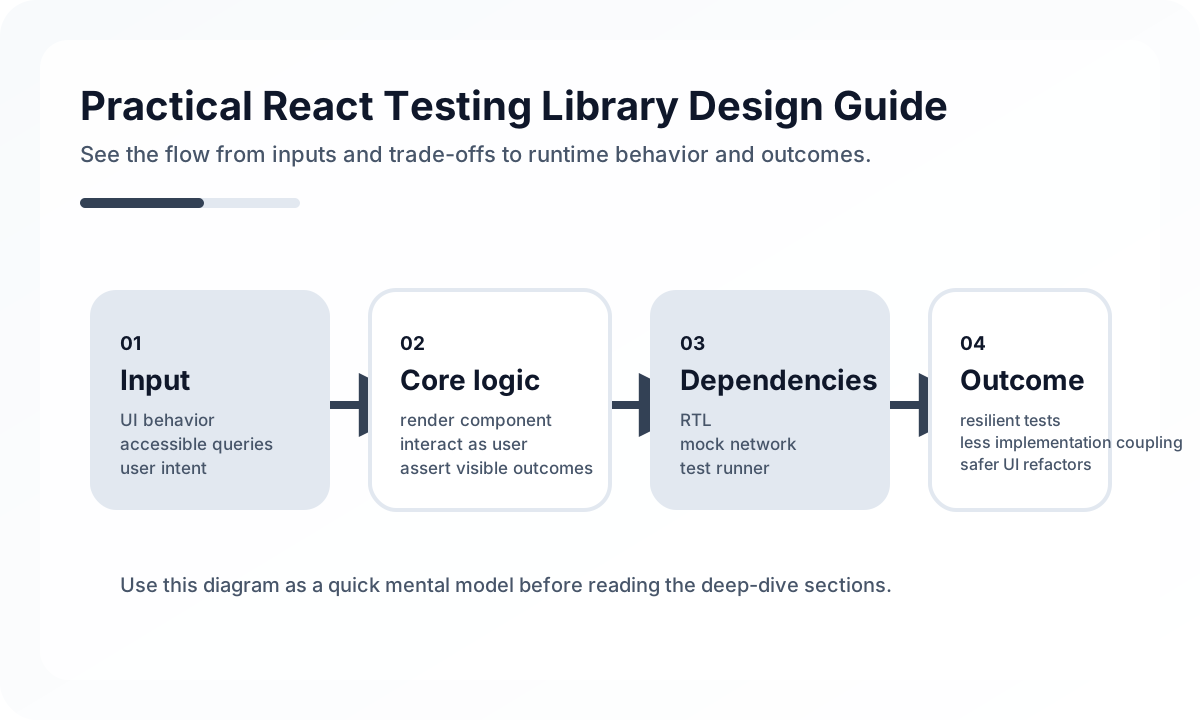
That makes RTL a strong fit for UI behavior, not for proving every implementation detail inside the component tree.
Test visible behavior first
A healthy RTL test asks:
- what can the user see?
- what can the user click, type, or select?
- what changes on screen after the interaction?
That usually leads to stronger assertions like:
- validation errors become visible
- loading indicators appear and disappear
- a saved state is shown after submission
- a button becomes disabled when input is invalid
These outcomes survive refactors better than tests that inspect component state directly.
Query priority matters
RTL works best when queries reflect how users and assistive technologies find elements.
A good order of preference is usually:
getByRolegetByLabelTextgetByTextgetByPlaceholderText- test IDs only when semantic queries are not enough
If a test relies heavily on querySelector or brittle DOM traversal, it is often drifting away from user-centered verification.
Use real interactions, not low-level event shortcuts
userEvent is usually a better fit than firing low-level events directly because it models user intent more realistically.
That matters for:
- typing behavior
- focus movement
- click interaction timing
- keyboard navigation
Low-level events still have a place, but defaulting to them too early often makes tests less representative.
Async UI needs disciplined waiting
Modern React UIs frequently include:
- loading states
- deferred rendering
- server data fetches
- validation after async checks
That is why strong RTL tests use:
findBy...for elements that appear laterwaitForfor clear condition-based waiting- explicit assertions about loading and settled states
Arbitrary timing tricks usually make the suite weaker and more flaky.
Shared render helpers should remove boilerplate, not hide meaning
Many React tests need providers for routing, theme, query clients, or state stores. Shared render utilities are useful, but only when they reduce noise without making setup mysterious.
Good render helpers:
- supply required providers consistently
- keep tests short
- allow scenario-specific overrides
Weak helpers hide too much and make it difficult to understand what environment the test actually uses.
Avoid excessive mocking of the component world
RTL tests lose much of their value when every child, hook, and dependency is mocked aggressively.
Mock where the boundary is genuinely external or unstable, such as:
- network requests
- browser APIs not available in test
- expensive integration paths
Do not default to mocking just to keep tests narrow if doing so removes the behavior you actually care about.
Common anti-patterns
Watch for these patterns:
- inspecting component state directly
- relying on CSS selectors instead of semantic queries
- overusing mock implementations for child components
- skipping loading-state assertions in async UI
- building giant render helpers that obscure setup meaning
These patterns make tests less resilient and less trustworthy.
Review checklist
Before calling an RTL suite healthy, ask:
- Does the test verify something the user can actually observe?
- Are queries semantic and intention-revealing?
- Are async states handled through conditions instead of timing hacks?
- Do render helpers clarify setup instead of hiding it?
- Are mocks limited to real unstable boundaries?
Closing judgment
RTL brings React testing back to the user’s perspective. The more assertions are anchored in visible outcomes, the longer the tests tend to survive refactors and continue providing useful confidence.
Continue Reading
Related posts
Mock, Stub, and Spy Test Double Design Guide
A practical guide to choosing the right test double. Covers the difference between state verification and interaction verification, the risk of excessive mocking, and how to decide between mocks, stubs, spies, and fakes.
🧪 TestTDD in Practice: Red-Green-Refactor
A practical guide to TDD as a design feedback loop rather than a memorized procedure. Covers the meaning of Red-Green-Refactor, where it works best, where it can be too much, and how to apply it sustainably in real teams.
🖥️ FrontendMastering React Server Components: RSC and Server Actions
This guide explains React Server Components as an architectural choice rather than just a feature overview. It covers client-component boundaries, Server Actions, caching, streaming, and common production pitfalls in the context of the Next.js App Router.
🖥️ FrontendReconciliation Boundaries in Optimistic UI
Optimistic UI feels fast, but complexity appears when the server disagrees. This guide explains where optimistic updates should stop.
Next Path