React Native vs Flutter: 2026 Comparison Analysis
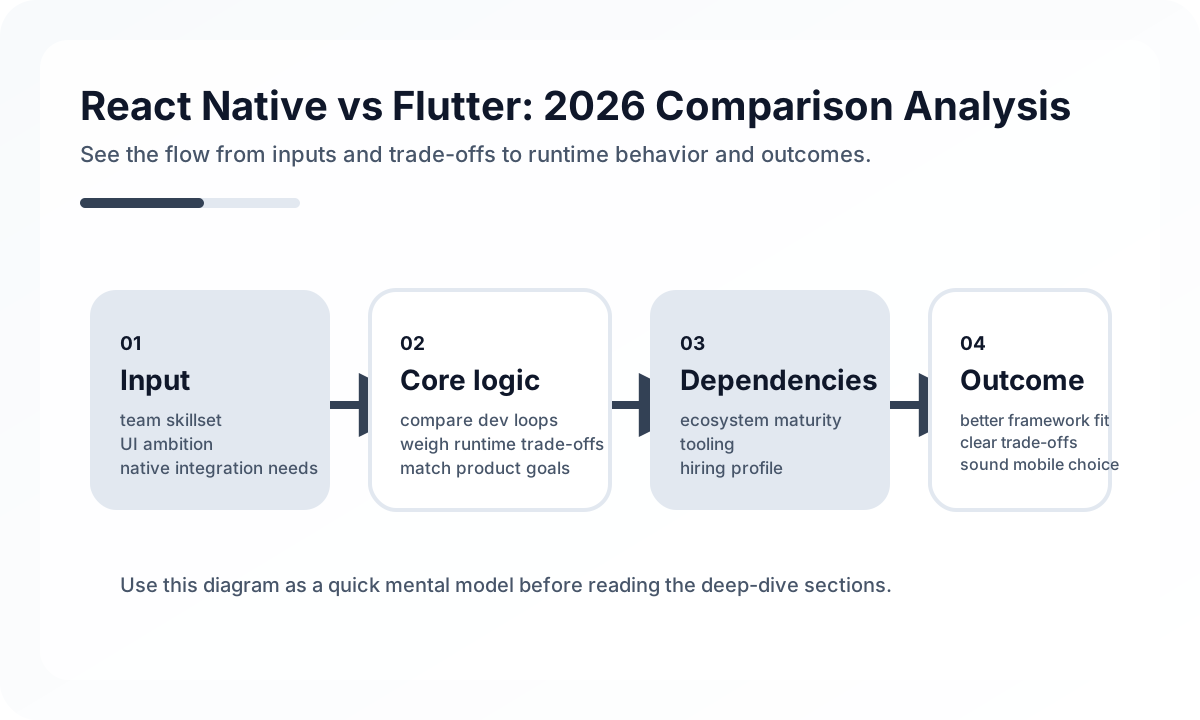
Choose Based on Team Reality
React Native is attractive when the company already has strong React talent and wants to reuse JavaScript, web mental models, and parts of the product platform. Flutter is attractive when the team wants a more vertically integrated UI stack and is comfortable adopting Dart plus a more app-centric development model.
The wrong move is choosing either tool because of hype while ignoring team shape.
Where React Native Usually Wins
- easier adoption for web-heavy teams
- strong integration with React ecosystem thinking
- faster staffing in organizations already hiring React engineers
- a practical path when product wants shared logic across web and mobile
Its common pain points are native dependency complexity, environment drift, and performance sensitivity in UI-heavy screens when architecture is weak.
Where Flutter Usually Wins
- highly controlled rendering and visual consistency
- strong experience for custom UI and animation-heavy products
- cohesive tooling across supported platforms
- fewer cross-layer surprises when building design-system-heavy apps
Its tradeoff is organizational: you are choosing a more distinct stack with a smaller hiring pool in many markets.
Questions That Lead to Better Decisions
Ask:
- Is the team mostly web-first or mobile-first?
- Will the product need highly custom motion or rendering?
- How much native bridging is expected in year one?
- How important is code sharing with existing React systems?
- What hiring and onboarding path is actually realistic?
The Practical Conclusion
Neither choice is universally better. React Native is often the better business decision for React-heavy teams that need speed and staffing flexibility. Flutter is often the better product decision for teams that want tighter control over rendering and a more unified app stack. Good teams succeed with either because they match the tool to the organization instead of forcing the organization to serve the tool.
Continue Reading
Related posts
Mobile App Performance Optimization: A Practical Guide for React Native and Flutter
How to optimize performance in React Native and Flutter apps. Covers rendering optimization, image optimization, list performance, memory management, and bundle size reduction.
📱 MobileReact Navigation 6 Complete Guide
A practical guide to React Navigation 6, the standard navigation library for React Native. Covers Stack, Tab, Drawer, nested navigators, and deep linking.
📚 IT StoriesSteve Jobs and the iPhone Reset of Computing
The iPhone was not just a successful device launch. It changed how people touched, imagined, and carried computing itself.
📚 IT StoriesHow Android Became the Mainstream Mobile Platform
As the phone industry shifted from device-centric products to app-centric platforms, Android spread with remarkable speed. This is the story of why.
Next Path