Mobile Release Trains and Incremental Rollout Operations
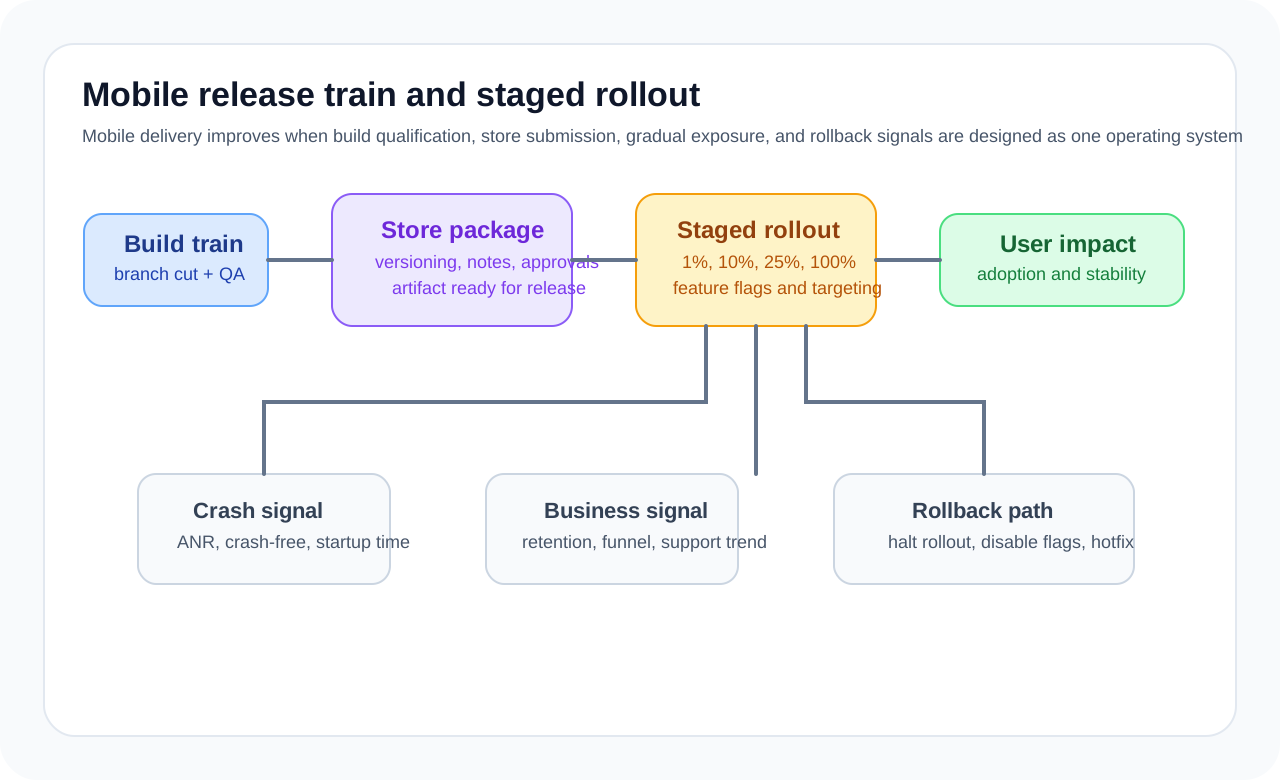
Release Trains Reduce Last-Minute Chaos
A release train creates a predictable cadence: feature cutoff, stabilization, validation, submission, staged rollout, and full expansion. That rhythm shifts the team from negotiation-based delivery to operations-based delivery.
Benefits include:
- fewer debates about whether one more change should squeeze in
- clearer expectations for QA and product teams
- easier risk communication to stakeholders
- more reliable incident handling when something goes wrong
Rollout Should Follow Risk, Not Hope
Shipping to 100 percent immediately is rarely the smart default. Use staged rollout to confirm crash rate, startup health, payment success, and backend compatibility before broad exposure.
A practical rollout model:
1% -> 5% -> 20% -> 50% -> 100%Promotion between stages should depend on metrics, not calendar pressure.
Observability Must Be Ready Before Submission
Release operations fail when the team only begins watching dashboards after the update is live. Before rollout starts, define:
- crash thresholds that block promotion
- screen-level or journey-level health signals
- owner rotation for rollout monitoring
- rollback or pause criteria
- remote config or feature flag fallback paths
If a release cannot be slowed, disabled, or partially degraded safely, it is carrying too much launch risk.
Separate Binary Risk From Feature Risk
Not every change needs a new binary decision. Feature flags, remote config, and server-side gating let teams reduce exposure without resubmitting the app. The binary should deliver capability. The control plane should decide how much of it is active.
What Good Mobile Operations Look Like
Strong mobile teams do not merely ship features. They ship a controlled rollout system with clear cutoffs, visible health signals, defined stop conditions, and rehearsed responses to failure. That is how mobile release work becomes repeatable instead of stressful.
Continue Reading
Related posts
Running a Mobile Crash Budget
Mobile stability is not only about reducing crashes. It is also about deciding which level is acceptable and when release should stop.
📱 MobileA Mobile Feature Flag Expiry Playbook
Feature flags accelerate releases, but if they are never retired they quickly increase code and operational complexity.
🧪 TestDesigning Smoke Tests for Release Gates
You cannot run everything before deployment. A strong release gate depends on a short, reliable smoke test set with clear purpose.
🧪 TestConnecting Synthetic Monitoring and Canary Testing
Testing should not end at pre-release CI. This post explains how to connect synthetic monitoring with canary rollout validation.
Next Path