Offline-First Mobile Sync Architecture
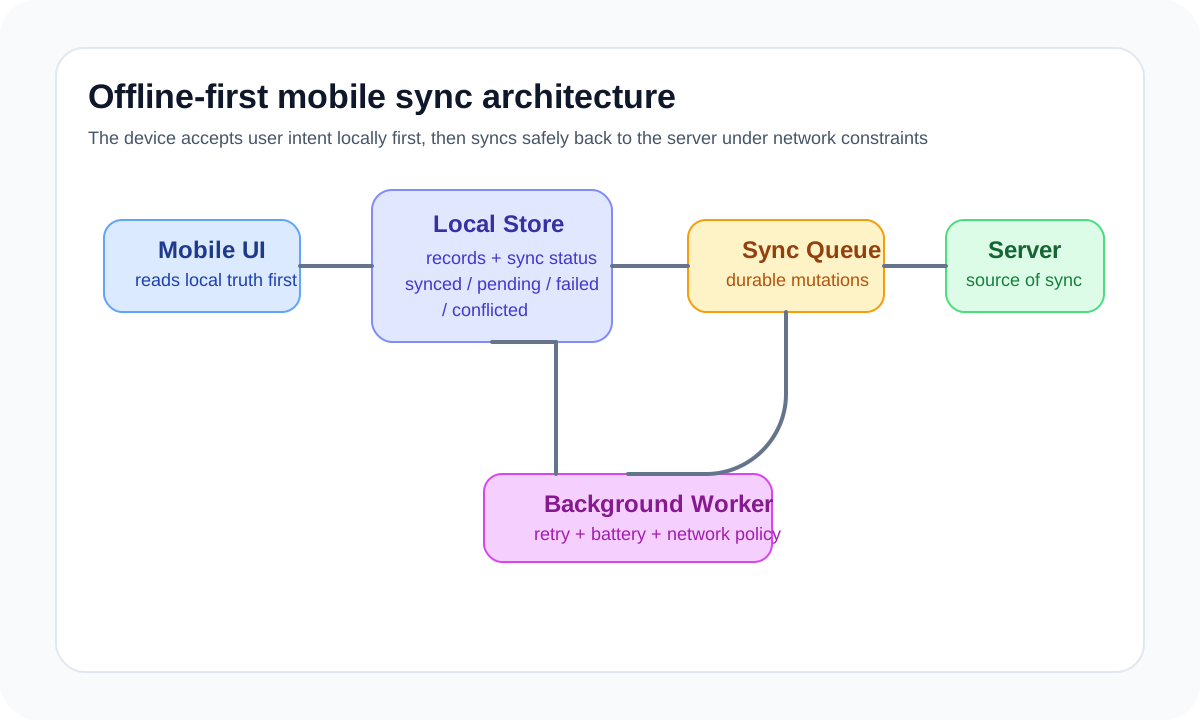
Offline-first mobile architecture is not just about caching recent API responses. It is about treating the device as an operational node that can accept user work, preserve intent, and reconcile with the server later. That shift is what makes field apps, commerce flows, messaging, and note-taking products feel reliable under unstable connectivity.
Local Data Must Become the Source of Truth
If the UI reads directly from the network whenever it needs fresh data, the app is still online-first. In a real offline-first design, the screen reads from local storage and the sync layer updates that store asynchronously.
That usually means:
- a local database for durable state
- an outbound queue for pending mutations
- metadata for sync status, retry count, and conflict markers
- a background worker that syncs under network and battery constraints
Separate User Intent From Server Confirmation
One of the most important design rules is to persist user intent immediately. If a technician fills a form underground or a sales rep updates inventory in a weak signal zone, that action should not disappear because the API call failed in the moment.
A practical local model often looks like this:
record_state: synced | pending | failed | conflictedThat small status field lets the UI explain reality honestly without blocking the user.
Conflict Resolution Needs Product Rules
Teams often delay conflict strategy until late, but that is one of the first architectural decisions. “Last write wins” is easy and sometimes acceptable. In other domains it silently destroys valuable data.
Define early:
- which entities can be merged automatically
- which conflicts require user review
- whether timestamps are trustworthy across devices
- how duplicate submissions are detected
Background Sync Is an Operations Problem
Battery limits, OS restrictions, and background execution policies mean sync is not guaranteed to run exactly when you want. Design the system so it remains correct even when sync is delayed.
That means:
- idempotent server endpoints
- safe retry behavior
- durable queues
- observability around stuck items and repeated failures
What Strong Offline Apps Get Right
The best offline-first apps make synchronization visible without making it scary. Users know whether their work is saved, pending, or blocked. Engineers know which queues are unhealthy. Product teams know where conflicts happen most often.
That combination of local truth, explicit sync state, and operational observability is what turns offline-first from a marketing label into a dependable architecture.
Continue Reading
Related posts
Offline Sync Conflict Resolution for Mobile Apps
Offline-first quality depends less on local storage choice and more on how conflicts are resolved when devices reconnect.
📱 MobileJetpack Compose for Beginners: Declarative Android UI
How to build Android app UIs with Jetpack Compose. Covers Composable functions, state, LazyColumn, ViewModel, and navigation with practical examples.
⚙️ BackendA Practical Guide to CQRS and Event Sourcing
This guide explains CQRS and Event Sourcing in terms of domain boundaries, projections, consistency tradeoffs, snapshots, and operational complexity.
🖥️ FrontendMicro Frontends: Applying Module Federation in Production
This guide explains micro frontends from the perspective of team boundaries and deployment independence rather than a technical demo. It covers Module Federation structure, shared dependencies, runtime loading, state sharing, operational pitfalls, and adoption criteria.
Next Path