TypeScript Generics: A Practical Guide
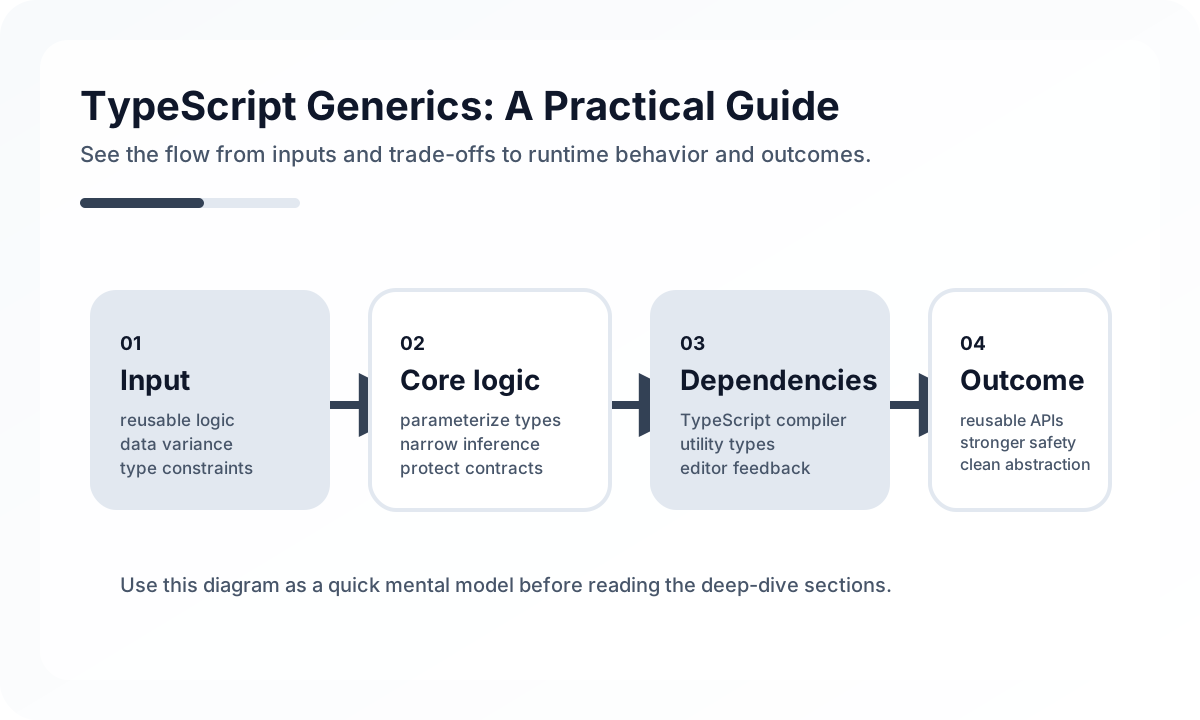
That distinction matters because TypeScript can drift from helpful typing into type-level theater surprisingly fast.
What Generics Are Really For
Generics are most valuable when the caller and callee need to stay connected through the type system.
Common examples include:
- data-fetching helpers that return the requested payload shape
- repository interfaces that preserve entity types
- form utilities that map field names to field values
- event systems where payload type depends on event name
In each case, the generic parameter expresses a relationship, not just a placeholder.
When a Generic Is Better Than a Union
Teams often overuse generics for problems that would be simpler with:
- unions
- overloads
- explicit named types
- a duplicated function that is easier to read
A good rule is this: if the type parameter does not connect two or more positions meaningfully, it may not need to exist.
Example: A Useful Generic Contract
type ApiResult<T> =
  | { ok: true; data: T }
  | { ok: false; message: string };

async function requestJson<T>(url: string): Promise<ApiResult<T>> {
  const response = await fetch(url);

  if (!response.ok) {
    return { ok: false, message: response.statusText };
  }

  return { ok: true, data: (await response.json()) as T };
}
This is useful because the caller chooses T, and the function preserves that type through the result boundary.
Constraints Matter More Than Flexibility
Generic code becomes safer when constraints express what is required.
For example:
function pluck<T, K extends keyof T>(obj: T, key: K): T[K] {
  return obj[key];
}
The K extends keyof T constraint is doing the real work. Without it, the helper would be flexible but untrustworthy.
This is a core TypeScript lesson: well-chosen constraints improve both safety and editor experience.
Inference Is Part of the API
Developers often think only about whether a generic compiles. In practice, inference quality is part of the public API.
If callers constantly need manual annotations, type assertions, or workarounds, the generic is probably too clever.
Good generic APIs usually:
- infer useful defaults automatically
- keep type parameters few in number
- produce readable errors
- keep the mental model obvious from the call site
Conditional Types Need Restraint
Conditional types and infer are powerful, but they create a steep readability curve.
They are worth using when:
- the utility solves a repeated boundary problem
- the result type would otherwise be duplicated in many places
- the team can still explain the behavior during code review
They are a poor fit when they exist mainly to impress or to avoid writing one extra explicit type.
Common Generic Anti-Patterns
- adding
<T>when a concrete type is clearer - introducing several type parameters with weak naming
- making inference so complex that errors become unreadable
- building one generic abstraction to cover unrelated cases
- forcing runtime uncertainty to look precise through type assertions
The last point is especially dangerous. Types can describe trust, but they cannot create it.
Review Checklist
- Does the generic preserve a meaningful type relationship?
- Would a union, overload, or explicit type be clearer?
- Are constraints expressing real rules instead of vague flexibility?
- Is inference good enough that callers do not fight the API?
- Can the team explain the design without turning code review into type archaeology?
Closing Judgment
Generics are excellent when they carry intent forward through a codebase. They are harmful when they turn ordinary APIs into puzzles. Strong TypeScript design is not about maximum abstraction. It is about preserving the right relationships while keeping the call site easy to understand.
Continue Reading
Related posts
TypeScript Utility Types: A Practical Guide
A production-focused guide to TypeScript utility types. Learn how to model DTOs, update payloads, selectors, and derived types without making your type layer harder to read.
💬 LanguageModern JavaScript Syntax Through ES2024
A practical guide to modern JavaScript syntax through an engineering lens. Learn which ES2024-era features genuinely improve code quality and which ones still need restraint.
🔧 ToolsComplete ESLint + Prettier Setup Guide
A practical guide to separating linting and formatting concerns across React, Vue, and TypeScript projects, with team-level rules for local autofix and CI enforcement.
📱 MobilePWA Complete Guide: Install a Web App Without an App Store
How to build a Progressive Web App (PWA). Covers Service Workers, the Web App Manifest, offline support, push notifications, and home screen installation with practical examples.
Next Path