A Guide to Zero-Downtime Schema Migration
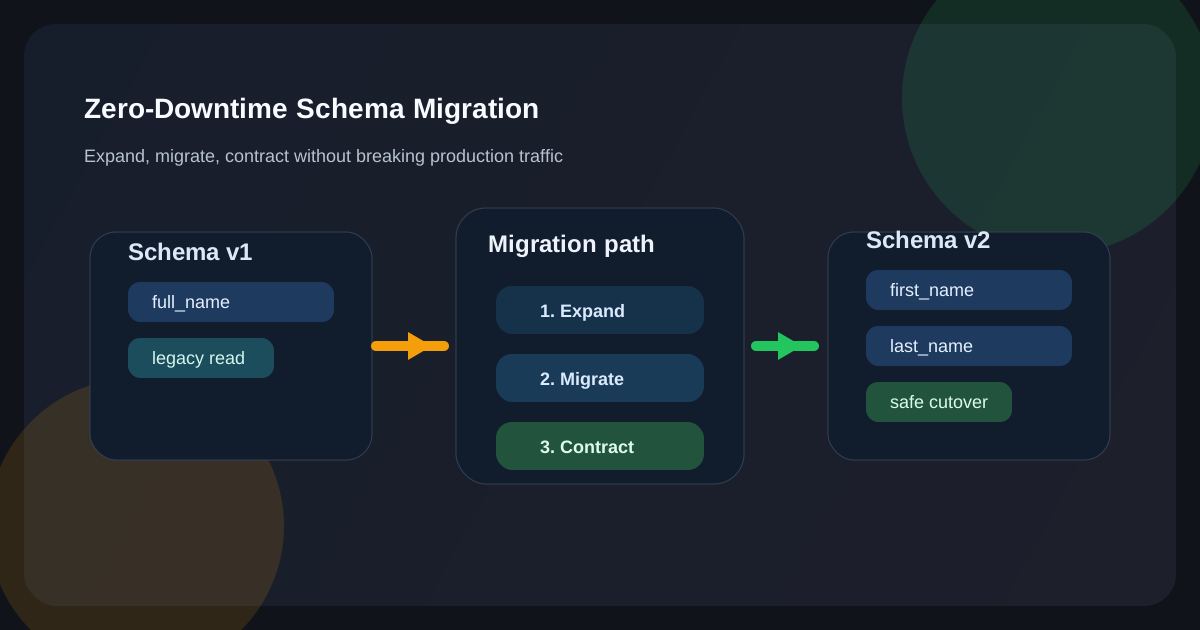
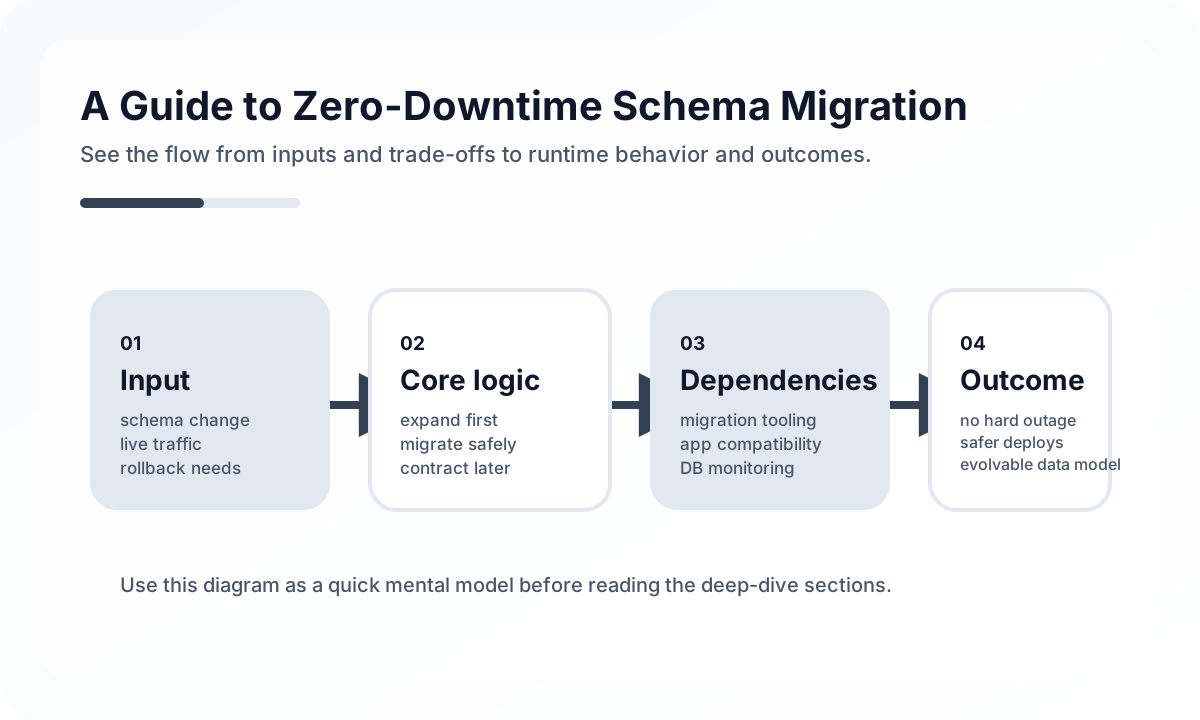
The core of zero-downtime migration is to separate expansion, transition, and cleanup into distinct phases.
Why Schema Changes Are Risky
The danger is not just the DDL statement itself. The real challenge is that applications and data move at different speeds.
- application servers roll out gradually
- batch jobs may keep old logic for a while
- reporting systems and external consumers may still depend on old fields
- rollback can bring older code paths back into service
For a period of time, old and new worlds must coexist. The migration has to be designed for that overlap.
The Safest Pattern: Expand -> Migrate -> Contract
Most zero-downtime changes follow this structure:
1. Expand   : add new columns, tables, or indexes
2. Migrate  : move application behavior and data gradually
3. Contract : remove structures that are no longer needed
Suppose a full_name column is being replaced by first_name and last_name.
- Add the two new columns.
- Let the application read and write both formats for a while.
- Backfill old records.
- Remove the old column only after the new path is fully stable.
If the old column is removed first, any still-running old code path can fail immediately.
Design the Compatibility Window Explicitly
The most important part of a migration is the compatibility window. Teams should be able to answer:
- can older code continue running safely for hours or days
- how are conflicts handled during dual-write periods
- when does the read path switch completely
- how is backfill retried and verified
In practice, read and write transitions are often separated. Teams first dual-write to both structures, then switch reads only after the new destination is sufficiently populated and validated.
Backfill Is an Operational Workflow
On large tables, backfill competes with production traffic. A common mistake is assuming one off-peak batch is enough. In reality, backfill should be designed with:
- small batch sizes
- visibility into lock and index pressure
- idempotent retries
- checkpoints that record progress
Backfill needs its own observability. Without metrics for processed rows, failure rate, and remaining records, operators are forced to manage a risky transition by intuition.
Rollback Is About State, Not Just DDL
In zero-downtime migration, rollback rarely means “reverse the schema change.” It usually means “can we safely return to the previous read/write behavior?”
- adding new columns usually has low rollback cost
- once reads switch, application rollback becomes more important
- after old columns are deleted, full rollback may no longer be practical
That is why destructive cleanup should be the final phase and should happen only after a long enough observation period.
Common Real-World Failure Modes
- the application starts dual-writing, but a batch job still reads only the old column
- a new index is added, but query-plan changes are never validated
- a backfill transaction is too large and causes replica lag
- dependency discovery stops at code search and misses BI or ad hoc scripts
External reporting tools, pipelines, and operational scripts are often the last consumers teams discover. Cleanup should be based on real query patterns and logs, not only source-code inspection.
Practical Checklist
- Can the new schema coexist safely with old code paths?
- Are read and write cutovers separated into distinct steps?
- Is the backfill observable and retry-safe?
- Are dependencies validated with logs and query evidence before cleanup?
- Is there enough observation time before dropping old structures?
Closing
Zero-downtime schema migration is less about SQL syntax and more about transition design. Strong teams think first about compatibility windows, then about data movement, and only much later about cleanup. In the end, schema migration is not just a database task. It is a system evolution strategy.
Continue Reading
Related posts
Applying Expand-Contract to Database Schema Changes
Trying to finish schema changes in one step raises deployment risk. Expand-contract breaks them into safer stages.
🗄️ DatabaseDesigning Idempotent Backfill Checkpoints
Backfills rarely finish in one perfect run. Checkpoint design determines whether a data migration can survive interruption and restart safely.
📈 TrendsPostgreSQL 18 Trends: What Actually Matters in Practice
PostgreSQL 18 is more than an upgrade headline. AIO, skip scan, better post-upgrade recovery, OAuth, and generated columns all point to a release focused on operational cost reduction.
🔧 ToolsWebpack to Vite Migration Guide
A practical migration guide from Webpack to Vite focused on dev-server model changes, plugin inventory, environment handling, and production validation.
Next Path