A Complete Guide to Solving the JPA N+1 Problem
[Load Orders]
     |
     +--> 1 query: select * from orders
     |
     +--> N queries: select * from member where id = ?
                     select * from member where id = ?
                     select * from member where id = ?
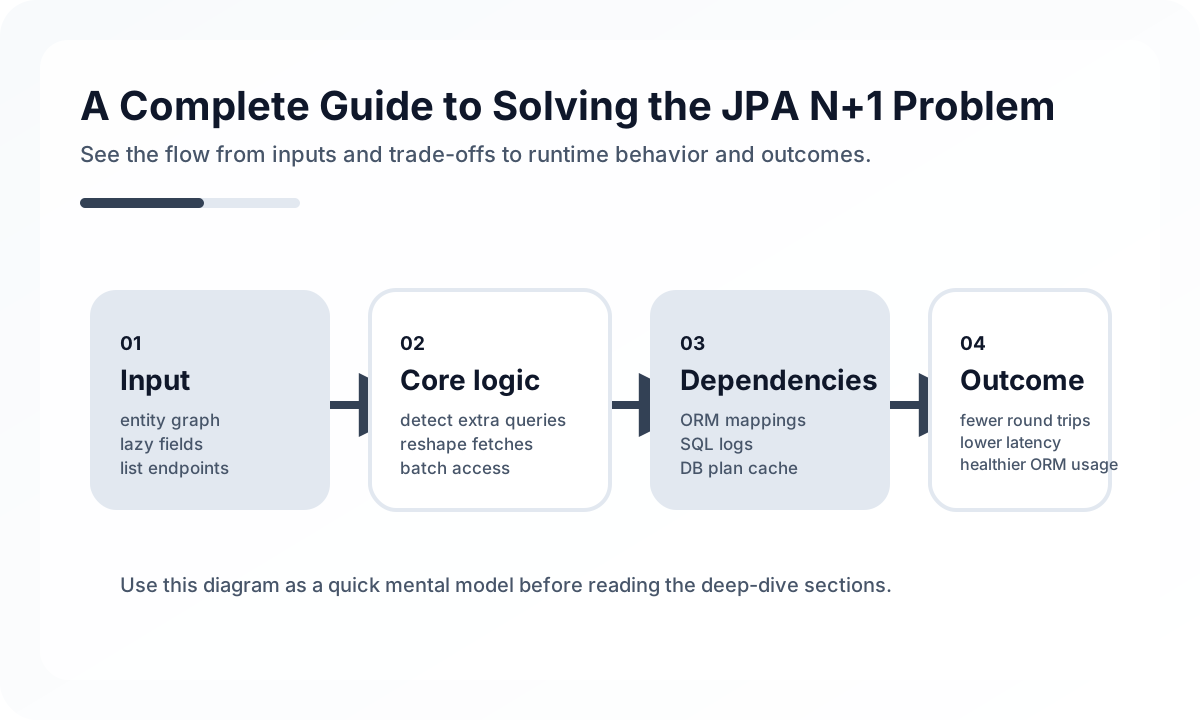
The N+1 problem is not just “too many queries.” It is a structural issue where one screen-level read operation gets amplified into extra queries inside a loop. It may look harmless at first, but as data volume grows, both network round-trips and DB load increase, so the key is to understand this “1 + N” flow visually first.
What Is the N+1 Problem?
It happens when one query fetches N results, and then N additional queries are executed, one for each result.
// Query 10 posts -> 1 query
List<Post> posts = postRepository.findAll();

// Load comments for each post -> 10 extra queries!
posts.forEach(p -> System.out.println(p.getComments().size()));
// 11 queries total
Solution 1 — Fetch Join
@Query("SELECT DISTINCT p FROM Post p JOIN FETCH p.comments WHERE p.id IN :ids")
List<Post> findAllWithComments(@Param("ids") List<Long> ids);
Drawback: Pagination is not supported for collection fetch joins.
Solution 2 — @EntityGraph
@EntityGraph(attributePaths = {"comments", "author"})
@Query("SELECT p FROM Post p")
List<Post> findAllWithGraph();
Solution 3 — Batch Size (Recommended)
# application.yml - global setting
spring.jpa.properties.hibernate.default_batch_fetch_size: 100@BatchSize(size = 100)
@OneToMany(mappedBy = "post")
private List<Comment> comments;Fetch N rows at once with an IN query -> SELECT * FROM comments WHERE post_id IN (1,2,...,100)
Solution 4 — Direct DTO Query
@Query("""
    SELECT new com.example.dto.PostSummary(p.id, p.title, COUNT(c))
    FROM Post p LEFT JOIN p.comments c
    GROUP BY p.id, p.title
    """)
List<PostSummary> findPostSummaries();
How to Choose a Solution
| Situation | Recommended Approach |
|---|---|
| Single-item read | Fetch Join |
| List + pagination | Batch Size |
| Complex aggregation | Direct DTO query |
| Multiple collections | Batch Size |
Counting Queries with Hibernate Statistics
spring.jpa.properties.hibernate.generate_statistics: true
logging.level.org.hibernate.stat: DEBUG
What Gets Hard in Production
- N+1 issues are rarely just an ORM bug. They usually reveal that read-model design and fetch boundaries were never made explicit.
- A system can pass tests and still collapse under production data volume when lazy access patterns multiply.
- The cost is not only latency but also unpredictable database pressure.
Architecture Decisions That Matter
- Design query use cases explicitly instead of assuming entity navigation is a free read model.
- Use fetch join, entity graph, projection, or dedicated query models based on the screen requirement.
- Separate write-oriented aggregate models from read-oriented query paths where necessary.
Practical Example
A query should reflect the exact screen need rather than generic entity traversal:
select o from Order o
join fetch o.customer
where o.status = :status
Anti-Patterns to Avoid
- Rendering lists by traversing lazy relations inside loops.
- Assuming
EAGERfixes design problems instead of moving them. - Measuring only single-request success and not total query count.
Operational Checklist
- Capture SQL count in integration tests for critical endpoints.
- Inspect slow endpoints with real production-like data volume.
- Prefer projections for read-heavy list screens.
- Keep ORM convenience subordinate to database access discipline.
Final Judgment
N+1 is best solved by better query design, not by toggling fetch options blindly. The real fix is to make read intent explicit.
Continue Reading
Related posts
MySQL Index Optimization Strategies — Query Analysis with EXPLAIN
This post explains how MySQL indexes work and how to optimize them using EXPLAIN analysis. It covers composite indexes, covering indexes, and index hints with practical examples.
🗄️ DatabaseA Practical Guide to SQL Performance Optimization
A production-focused guide to SQL tuning that treats performance as a workload problem. Learn how to read plans, reduce data access, tune indexes honestly, and avoid premature query heroics.
🧪 TestSpring Boot Test Slices: @WebMvcTest and @DataJpaTest
A practical guide to Spring Boot test slices from the perspective of test-pyramid design and execution cost. Covers when to use @WebMvcTest, @DataJpaTest, @JsonTest, @RestClientTest, and when @SpringBootTest is the better choice.
⚙️ BackendA Practical Guide to Spring Boot JPA and Hibernate
This guide covers entity boundaries, relationship cost, N+1, DTO reads, transaction design, and operational pitfalls when using JPA in production.
Next Path