Backend Idempotency and Retry Design Principles
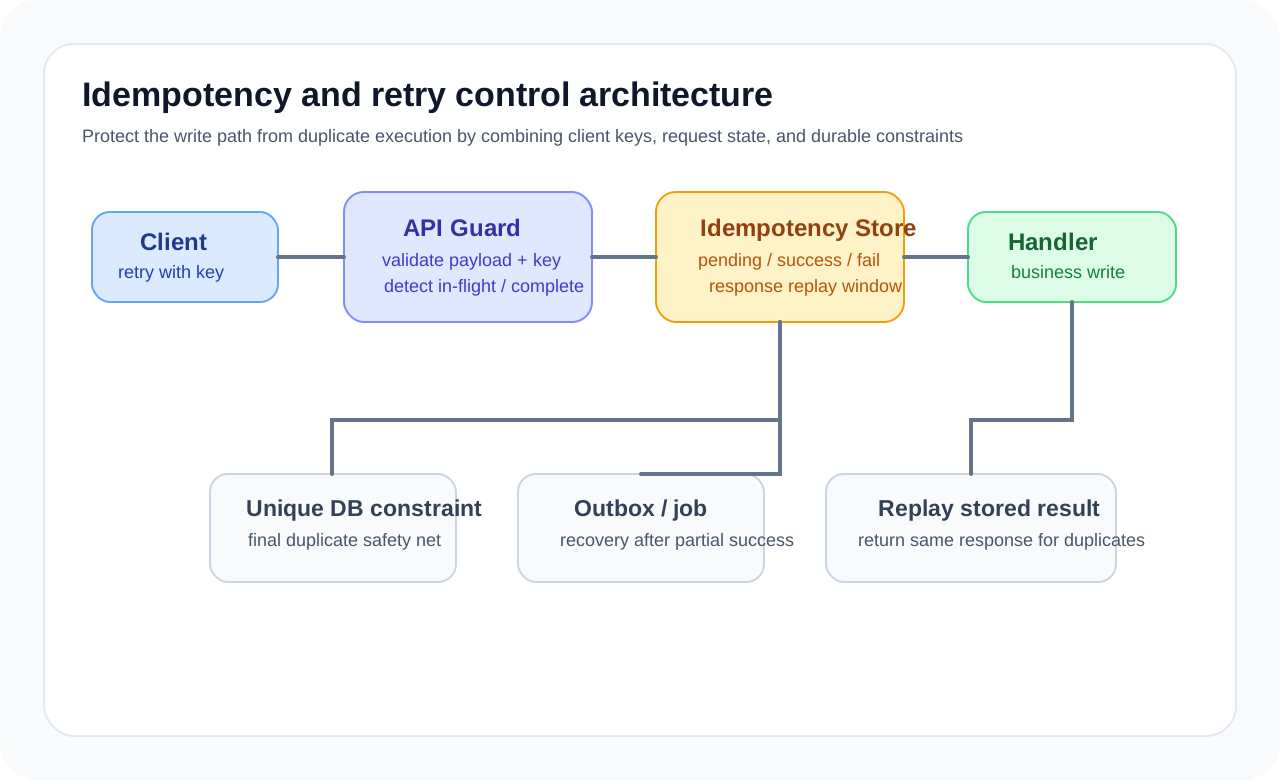
That is why idempotency is not just an optional API feature. It is a foundational design principle for building systems that can survive retries.
Idempotency and Retry Must Be Designed Together
Retry improves reliability, but without idempotency it can apply the same operation multiple times. On the other hand, if a team talks about idempotency without designing actual retry paths, recovery is still weak.
Good design addresses all of the following:
- which operations may execute more than once
- how duplicates are identified
- how the original successful result is reused
- how partially completed work is recovered
Idempotency is therefore less a purely functional concept and more an operational boundary design.
An Idempotency Key Is Not Enough by Itself
Many teams add an Idempotency-Key header and stop there. The harder part is the storage and validation strategy.
- is the key validated against the request body
- how long is the key retained
- are failure responses also reused
- how are in-progress and completed requests distinguished
If the same key is allowed for different payloads, the protection becomes misleading rather than useful.
Database Constraints Are the Final Safety Net
Application-level checks alone rarely eliminate race conditions. Durable protections such as unique constraints, guarded state transitions, and upsert patterns still matter.
For actions like order creation or payment confirmation, a reliable approach often combines:
- an idempotency key from the client or upstream system
- persisted request records on the server
- unique indexes or natural keys for duplicate protection
- response reuse for already-completed work
If application logic and database rules are not aligned, duplicates leak through under load.
Asynchronous Consumers Must Also Be Idempotent
Teams often harden HTTP APIs while neglecting consumers. But message systems commonly operate with at-least-once delivery, which makes consumer idempotency even more important.
- store processing history by message ID
- prevent duplicate state transitions
- guard repeated application of the same event
- plan compensating behavior around external side effects
This matters especially for actions such as email sending, point accrual, and stock deduction, where duplicate execution has immediate business cost.
Retryable Does Not Mean Retry Forever
Retries need policy and limits:
- which error classes are retryable
- what maximum count and backoff policy apply
- whether circuit breaking or dead-letter handling exists
- how repeated user actions are reflected in the product UX
Idempotency does not make unlimited retry safe. Expensive operations still need careful retry control tied to business meaning and operational cost.
Closing
Idempotency is not an advanced edge feature in distributed systems. It is a baseline requirement for surviving retries, duplicate delivery, and partial failure. Strong backend teams design not only the idempotency key, but also the storage model, database constraints, consumer behavior, and retry policy around it. In the end, idempotency means giving up the illusion that work happens only once and building systems that behave safely even when it does not.
Continue Reading
Related posts
API Idempotency Key Lifecycle Design
How to design idempotency key generation, storage, expiry, and replay behavior for real production APIs.
⚙️ BackendSaga Orchestration vs Choreography in Real Systems
How to choose between orchestrated and event-driven sagas when distributed workflows become hard to reason about.
🗄️ DatabaseDesigning Idempotent Backfill Checkpoints
Backfills rarely finish in one perfect run. Checkpoint design determines whether a data migration can survive interruption and restart safely.
💬 LanguageWhere Type Safety Ends and Runtime Validation Begins
Strong type systems do not remove the need for validation. This guide explains how production teams should divide responsibility between types and runtime checks.
Next Path