Prompt Engineering in Production: Versioning, Testing, and Failure Recovery
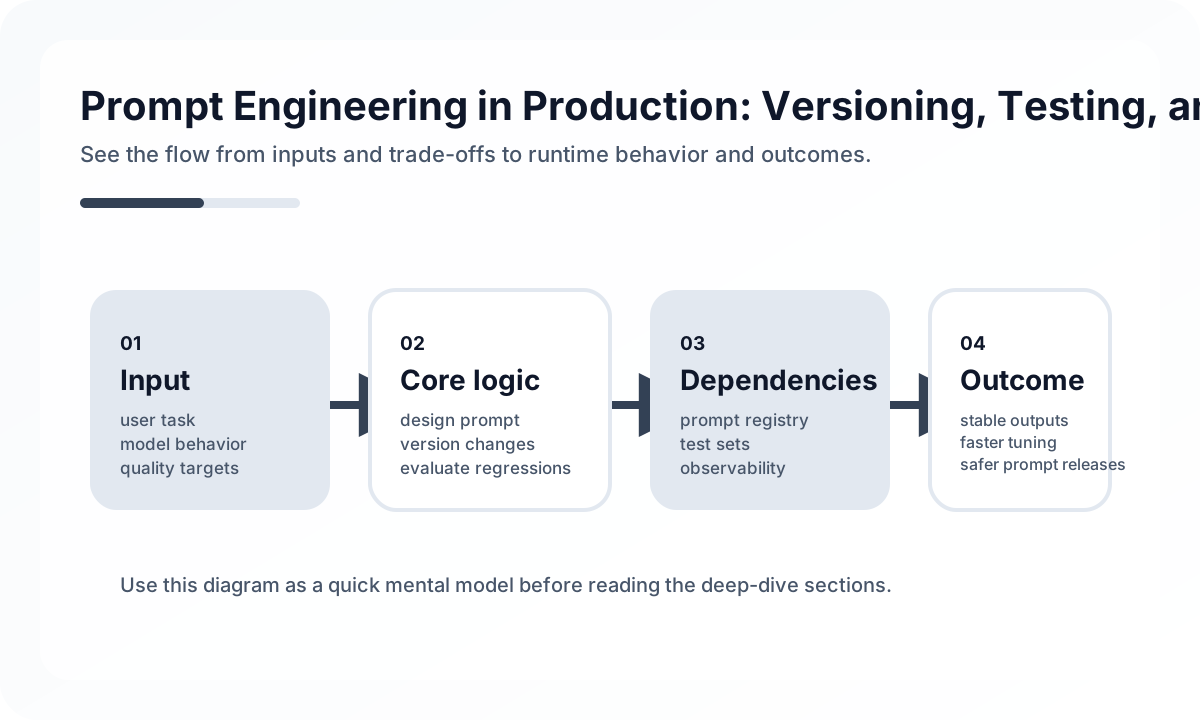
Treat Prompts as Contracts
A production prompt should define more than instructions. It should define:
- the job the model is expected to perform
- the allowed tone and scope
- the required output shape
- what to do when evidence is weak
- what the model must refuse or escalate
Without that contract, teams end up debating output quality subjectively after every change.
Structured Output Changes Everything
The fastest way to stabilize prompt behavior is to reduce output ambiguity. If downstream systems depend on fields, confidence markers, citations, or action types, use a structured schema rather than hoping free-form text stays stable.
This matters because failures become machine-detectable instead of socially noticeable weeks later.
Version Prompt Bundles, Not Just Strings
Prompt behavior depends on more than one string. It usually includes:
- system prompt
- developer instructions
- examples
- tool schema
- output schema
- retrieval context formatting
Bundle and version these together so regressions can be reproduced cleanly.
Test for Failure Modes
Useful prompt tests include:
- hallucination-prone requests
- adversarial phrasing
- missing-context scenarios
- long-context compression cases
- formatting compliance checks
A prompt is not production-ready because it answered ten happy-path questions well.
Rollback Must Be Easy
If a prompt update increases refusal errors, bad formatting, or overconfident answers, rollback should be immediate. That requires:
- prompt version identifiers in traces
- staged rollout where possible
- evaluation before full promotion
- a clear owner for prompt quality
Prompt engineering in production is not about clever wording. It is about making model behavior legible enough to test, monitor, and reverse safely.
Continue Reading
Related posts
An Agent Approval UX Playbook
Strong agents do not only automate more. They show clearly when a human should step in. This guide explains approval UX in practical terms.
🤖 AI / LLMOpsAI Evaluation Rubric for Production Teams
A practical way to define quality rubrics, failure classes, and release gates for production AI features.
📈 TrendsHow Small Models Are Changing Product Architecture
An important AI product trend is not only bigger models, but better decisions about where smaller models belong in the system.
📈 TrendsThe Next Stage of AI Coding Agents Is Bounded Execution
Coding agents are moving beyond autocomplete toward execution environments with explicit limits, permissions, and safety rails.
Next Path