AI Agent Guardrails: How to Keep Tool-Using Agents Safe and Useful
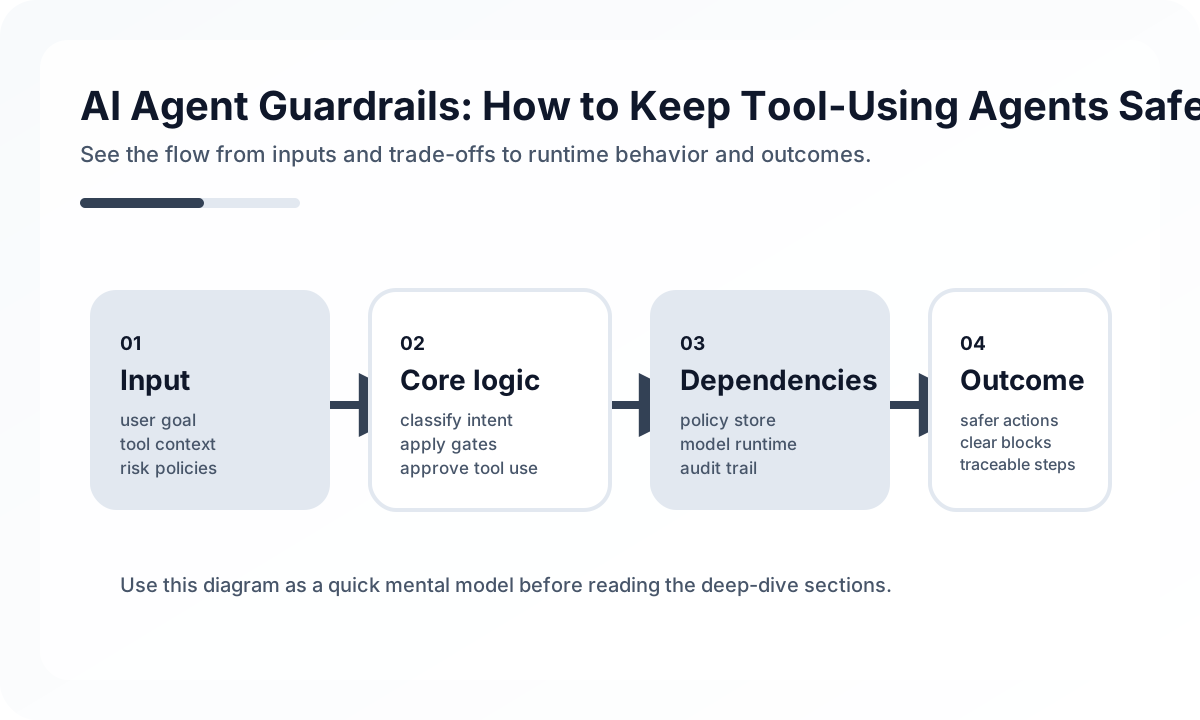
Start With Permission Boundaries
Do not think of agents as “smart enough to decide.” Think of them as systems that need explicit operating limits.
Useful boundaries include:
- read-only vs write-capable tools
- irreversible actions that always require approval
- maximum number of steps or retries
- network, filesystem, or credential scope
If all tools are available by default, the system is already too permissive.
Plans Should Be Visible Before Execution
One of the safest patterns is to require an execution plan before sensitive work begins. The plan does not need to be long, but it should expose intent:
- what the agent is trying to do
- which tools it expects to use
- what could change
- what conditions should stop execution
This helps both humans and automated policy systems catch risky behavior early.
Tool Outputs Need Validation
Agents often fail not because the model is malicious, but because a tool returns ambiguous or partial information and the agent keeps going anyway. Strong systems validate:
- whether tool output matches the expected schema
- whether required fields are missing
- whether the result justifies the next action
- whether repeated failures should trigger escalation
An agent should not be rewarded for pressing forward through uncertainty blindly.
Auditability Matters
If an agent changed data, sent a request, or took a production action, the team should be able to reconstruct:
- the prompt or plan
- the tools used
- the outputs observed
- the approval checkpoints passed
- the final decision path
Without this, incident review becomes guesswork.
Good guardrails do not make agents useless. They make them dependable. The goal is not maximum autonomy. The goal is the highest safe autonomy level that still preserves review, recovery, and accountability.
Continue Reading
Related posts
An Agent Approval UX Playbook
Strong agents do not only automate more. They show clearly when a human should step in. This guide explains approval UX in practical terms.
🤖 AI / LLMOpsModel Spec Product Governance Playbook
How to use model-behavior policy such as the OpenAI Model Spec as a practical product-governance layer for AI features.
🔧 ToolsDesigning Search Architecture for Engineering Docs
As documentation grows, the problem shifts from writing to finding. This guide explains how to design search-friendly engineering documentation.
📈 TrendsHow Small Models Are Changing Product Architecture
An important AI product trend is not only bigger models, but better decisions about where smaller models belong in the system.
Next Path